






Quick summary
B2B order management splits into two layers: capture and fulfilment. Tools like Brightpearl, Cin7, Linnworks, and Unleashed handle fulfilment and back-office operations. SparkLayer handles the buyer-facing capture layer. It gives trade buyers self-serve ordering, rep tools, and quoting, then feeds every confirmed order directly into whichever fulfilment system you run.
What B2B order management actually requires
B2B orders come with far more complexity than retail orders. Different customers have different prices, payment terms, approval workflows, and sales reps. Once an order is placed, it also needs to flow into your ERP, warehouse, and fulfilment systems without creating manual work.
That's why B2B order management isn't built around a single platform. It requires two connected capabilities: one for capturing orders from buyers and another for processing and fulfilling those orders behind the scenes. Together, those capabilities need to support the following:
- Account-specific pricing: Every trade buyer logs in and sees their own negotiated rates, volume breaks, and payment terms, not a public price list.
- Net terms and payment on account: Wholesale buyers do not pay at checkout the way retail customers do. Net 30, Net 60, and payment on account are standard B2B expectations.
- Rep-assisted ordering: Sales reps need to place orders on behalf of buyers, edit pricing on the fly, and close deals from anywhere, at trade shows, on calls, or visiting accounts.
- Quoting and negotiated orders: Many B2B transactions start with a quote request, not a checkout. The system needs to handle the full cycle from RFQ to confirmed order.
- Approval workflows: Larger organisations route orders through internal approval chains before they are confirmed.
- ERP-connected fulfilment: Once an order is confirmed, it needs to flow into the systems that handle inventory, routing, warehousing, and invoicing in real time with no manual re-keying between systems.
Most businesses discover that no single system handles all of this. That is because B2B order management has two distinct halves.
The two halves of B2B order management
B2B order management is split into two distinct halves.
1. The capture half: buyer-facing order management
This is how trade buyers access your storefront, see their own account-specific pricing, build orders, submit quote requests, and interact with your sales team. It covers the entire buying experience from login to order submission, including account pricing, rep-assisted ordering, quoting workflows, net terms, and minimum order rules.
Standard eCommerce platforms handle retail well but were not built for this level of B2B complexity. This is the half most wholesale brands are missing when their buyers still call or email to place orders.
2. The fulfilment and back-office half
This covers everything that happens after an order is confirmed. It includes routing the order to the right warehouse or 3PL partner, real-time inventory management, purchase order creation, invoicing, ERP sync, and financial reconciliation across every channel.
This is where your operations, warehouse, and finance teams live. ERP and operations platforms handle this half exceptionally well, but they have no buyer-facing portal and were not designed to give trade buyers a self-serve ordering experience.
Note: Most systems own one half. But the most effective B2B order management setups connect both halves: a capture layer that handles the buyer-facing experience, feeding into an operations platform that manages fulfilment and back-office processes.
SparkLayer works as an example of a capture layer. The systems below cover the fulfilment and back-office half. Together they cover the full process.
The systems that handle fulfilment and back-office
These platforms handle what happens after an order is confirmed. Each connects natively to SparkLayer, so orders captured through your B2B portal flow into whichever system you run without manual intervention.
Brightpearl
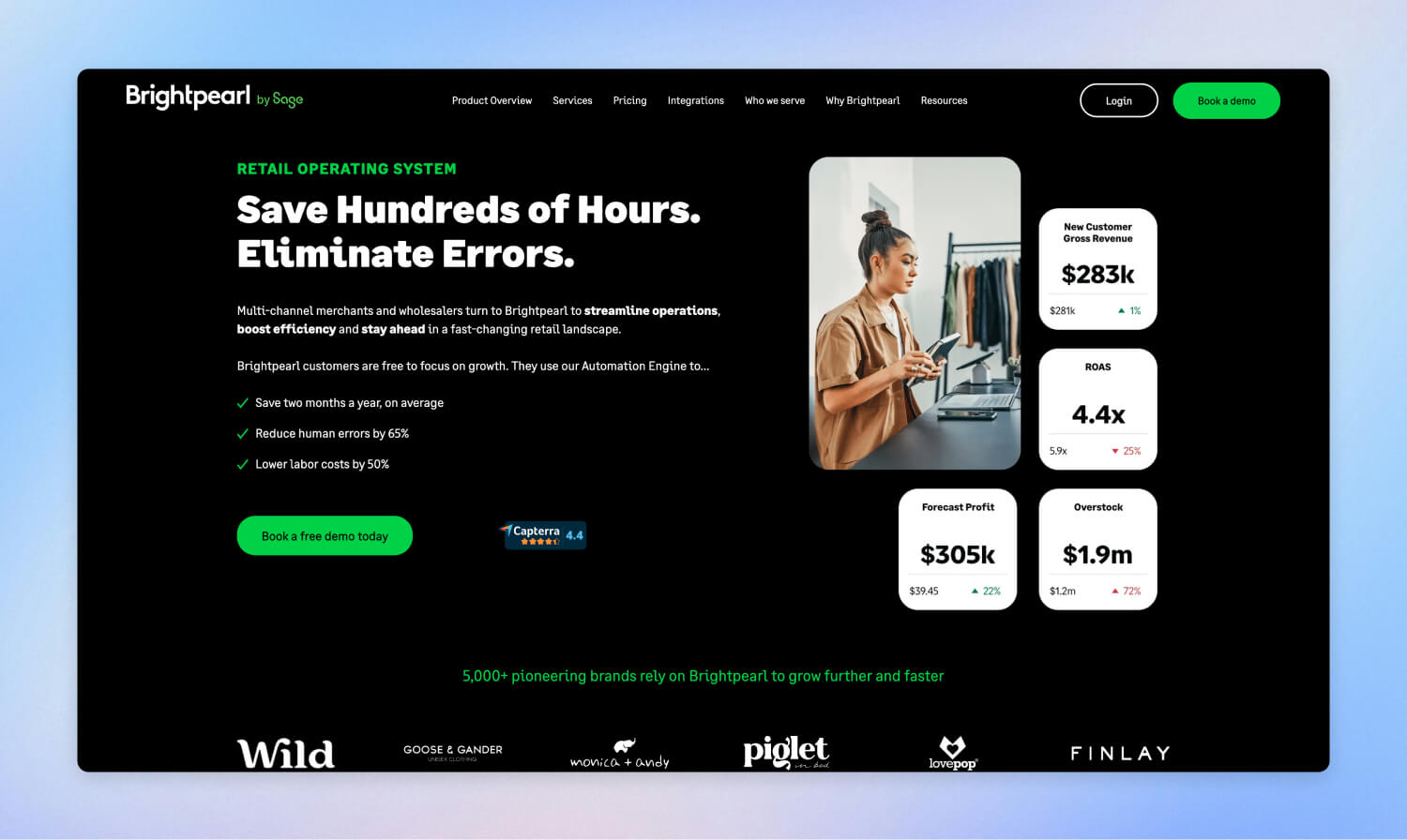
Brightpearl is a retail operations platform built for multi-channel merchants. It handles order routing, inventory management, purchasing, warehouse management, and financial reporting in one connected system. Its automation engine routes orders to the right warehouse, triggers purchase orders when stock hits a threshold, and reconciles payments across channels without manual steps.
For distributors and multi-channel retailers managing high order volumes across multiple fulfilment points, Brightpearl supports operations as order volumes grow with scale. It is commonly used by brands selling through multiple stores, physical retail locations, and wholesale accounts simultaneously, with all three channels managed from one system.
Unleashed
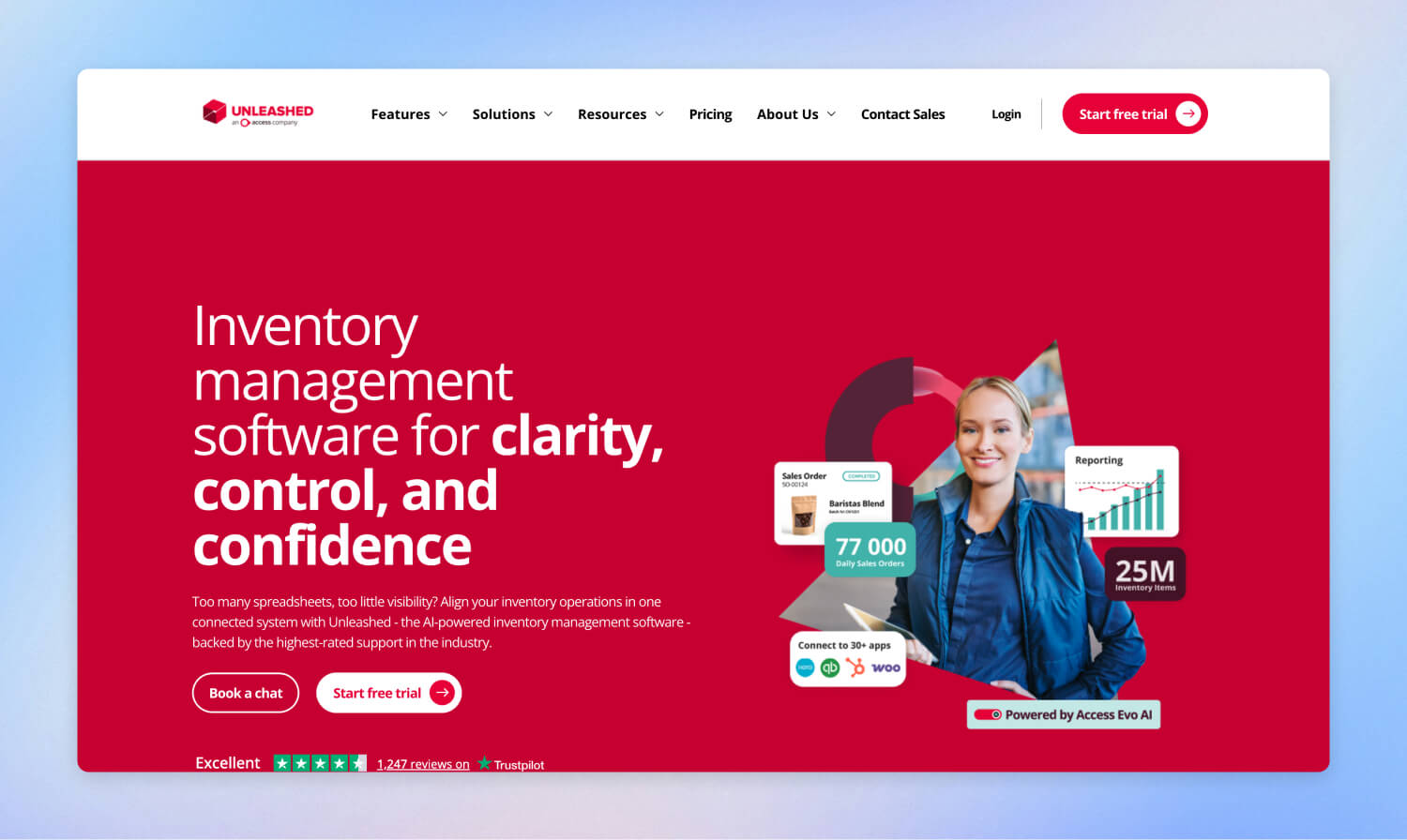
Unleashed is an inventory and order management platform built for product businesses selling in bulk. It tracks stock across multiple warehouses, manages purchase orders, and supports batch and serial number tracking for brands with traceability requirements.
Unleashed supports visibility into stock movement, purchasing patterns, and margins, making it a top choice for food, beverage, and health brands that need expiry management and tight wholesale inventory control. It's best suited for wholesale brands that want detailed inventory control but don't need the deep automation or customisation options that enterprise ERPs typically offer.
Cin7
Cin7 is an inventory and order management platform built for product businesses with complex stock structures. It handles multi-location inventory, inbound shipment tracking, purchase orders, B2B pricing tiers, and 3PL integration in one system.
Cin7 is built for manufacturers and wholesalers that manage inventory, purchasing, and order fulfilment in one system. It also supports batch tracking and expiry date management, making it a good fit for food, beverage, and health brands with traceability requirements.
Linnworks
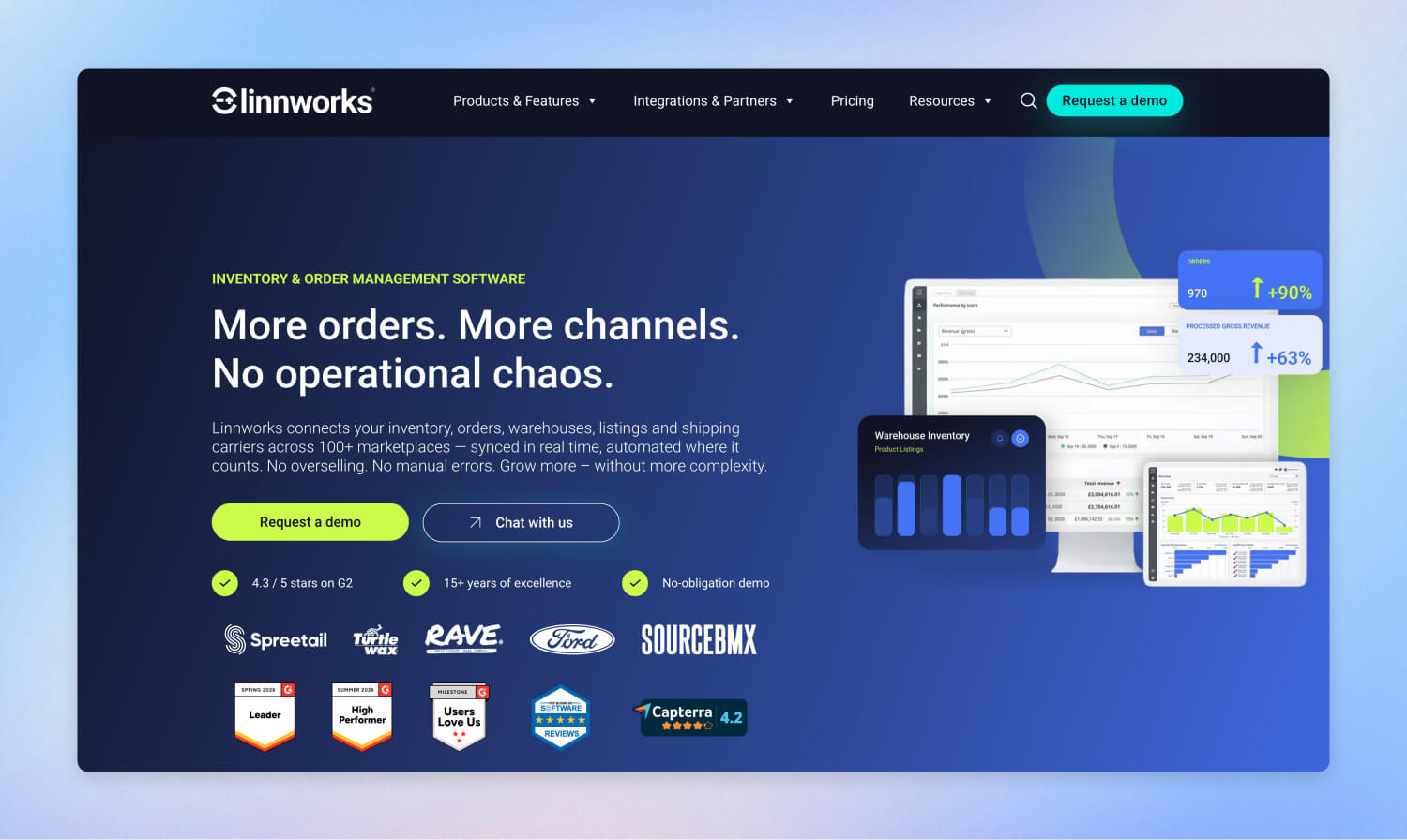
Linnworks specialises in multi-channel order and inventory management. It keeps stock accurate across every channel in real time, routes orders to the right warehouse or 3PL partner automatically, and consolidates order visibility into a single dashboard regardless of where the order originated.
For brands selling through multiple channels simultaneously, Linnworks supports accurate stock levels and automated order routing across a complex channel mix. Its key capabilities include automated order routing rules, 3PL and warehouse integrations, multi-currency support, and cross-channel reporting from a single dashboard.
Where SparkLayer fits: the B2B capture layer
The platforms above focus on fulfilment, inventory, and back-office operations after an order is placed. SparkLayer complements them by managing everything that happens before an order reaches your OMS.
As the buyer-facing capture layer, SparkLayer manages how trade buyers access your store, view their pricing, build orders, submit quotes, and interact with your sales team. Here's a closer look at the platform's features:
- Self-serve ordering: Trade buyers log into a branded B2B portal and see their own pricing, catalogue, and a wholesale checkout from the moment they arrive. Account-specific pricing, net terms, minimum order rules, and payment on account are all applied automatically at login using SparkLayer's Discount Engine for B2B-specific pricing rules. Buyers who used to call or email start placing orders on their own, at any time, without your team being involved.
- Sales Agent Portal: Your reps log into your actual storefront, not the admin backend. They toggle between buyer accounts, see live account-specific pricing, and place orders on behalf of buyers in real time whether they are at a trade show, on a call, or visiting a customer site. No paper forms, no re-keying, no delay between the conversation and the confirmed order.
- Quoting Engine: Trade buyers who need negotiated pricing submit quote requests directly through the portal. Your team responds through a built-in messenger, adjusts terms, and confirms. The quote converts to an order in one step with no separate email thread.
- AI Intelligent Cart: Buyers who send orders as emailed spreadsheets, PDFs, or purchase order documents get their orders into the system automatically via AI-powered order capture, removing manual re-keying entirely. This covers the wholesale reality for many FMCG, distribution, and manufacturing brands where buyers still send files rather than placing orders through a portal.
- Native integrations: Every order captured through SparkLayer syncs in real time to whichever back-office system you run. SparkLayer connects natively to Brightpearl, Cin7, Linnworks, Unleashed, Xero, and QuickBooks Online via the full integrations list, so the two halves of your B2B order management process stay connected without custom middleware or manual data entry between systems. See how 3,000+ brands have connected their wholesale operations using SparkLayer.
Ready to connect your B2B storefront to your order management stack?
SparkLayer handles the capture half of B2B order management, giving trade buyers self-serve access, account-specific pricing, rep ordering, quoting, and AI-powered order capture, then feeds every confirmed order directly into the fulfilment and back-office system you already run.
Start free, or book a demo to see how SparkLayer connects to your existing order management stack.